
Anatomy (Papers 1 & 2)
Learn the body as a connected topological structure, moving from regional fascial relationships to clinically testable landmarks and neurovascular pathways.
A focused guide for planning your study. Follow the current syllabus and teaching guidance from your own institution when deciding what to cover.
What to keep in view
High-Yield Exam Topics & Competencies
A working method
Recommended Focus
Topographic Relations: 40% | Diagram Speed-Drills: 35% | Applied Clinical Anatomy: 25%
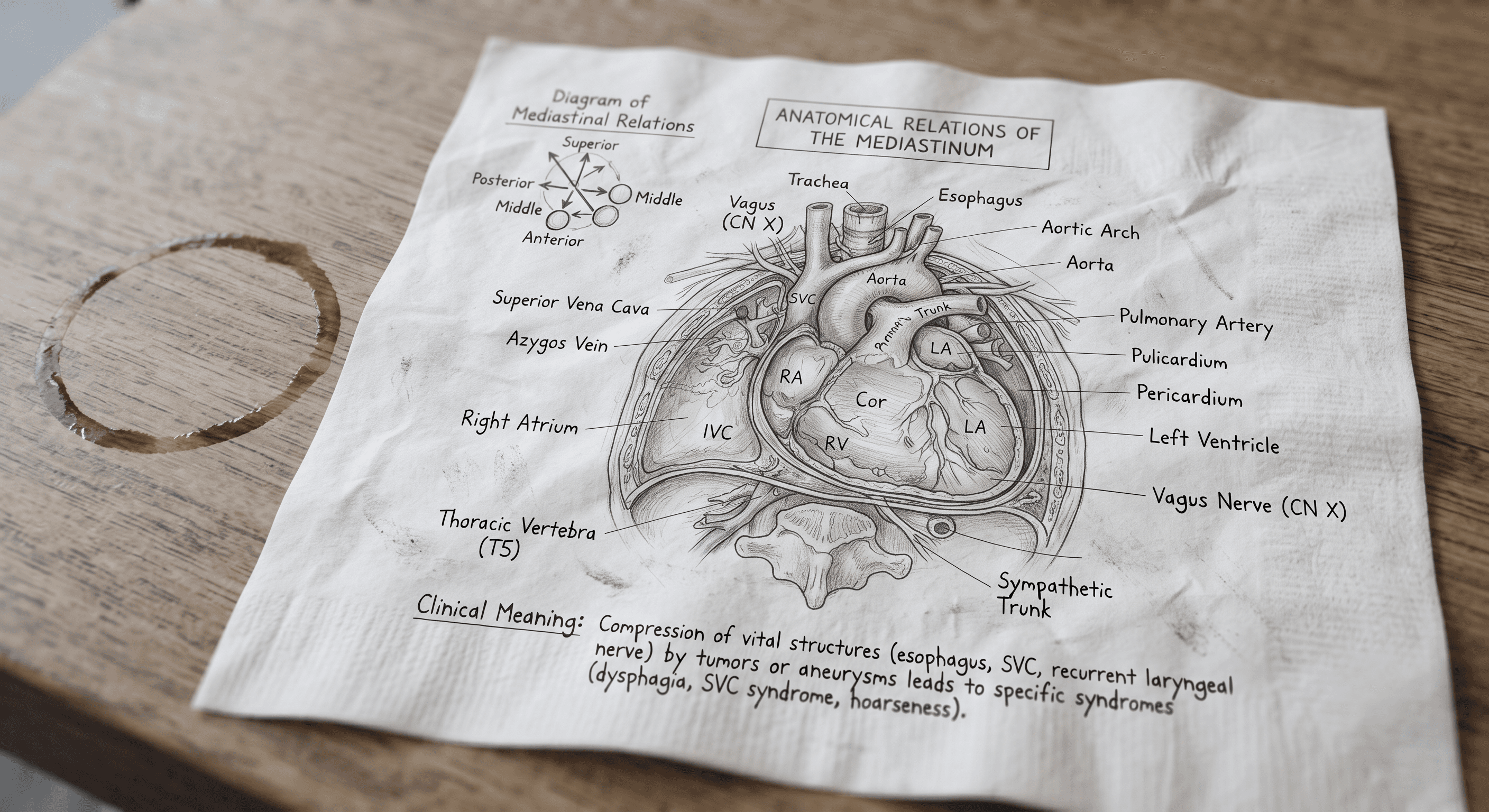
Begin each region with a simple topographic boundary map. Establish anterior, posterior, medial, and lateral relations before memorising minor muscle attachments or variations. Master two-minute schematic diagrams for every major fossa, canal, and triangle. Practice writing a three-sentence applied anatomy note connecting every structural boundary to a named clinical syndrome (e.g. nerve entrapment, bone fracture displacement, or surgical access hazards).
Ask Yourself
Could you sketch the region from memory and explain why each neighbouring structure is at risk during trauma or surgery?
Actionable Study Checklist
- 1Draw and label the region's schematic diagram in under 3 minutes
- 2Write directional relations in clear structured tables or subheadings
- 3Formulate one named clinical condition (e.g., Erb's palsy, Klumpke's, carpal tunnel) with anatomical cause
- 4Review osteology landmarks and surface markings on dry bones or atlas
Common Pitfalls & Examiner Red Flags
- !Spending 10+ minutes drawing shaded artwork instead of quick schematic line diagrams
- !Writing unorganized relation paragraphs without clear anterior/posterior/medial/lateral headings
- !Omitting lymph node drainage stations in visceral organ questions (Stomach, Breast, Thyroid)