
Build an anatomy answer that explains
Relations, diagrams, and clinical meaning can turn a list of facts into a readable answer.
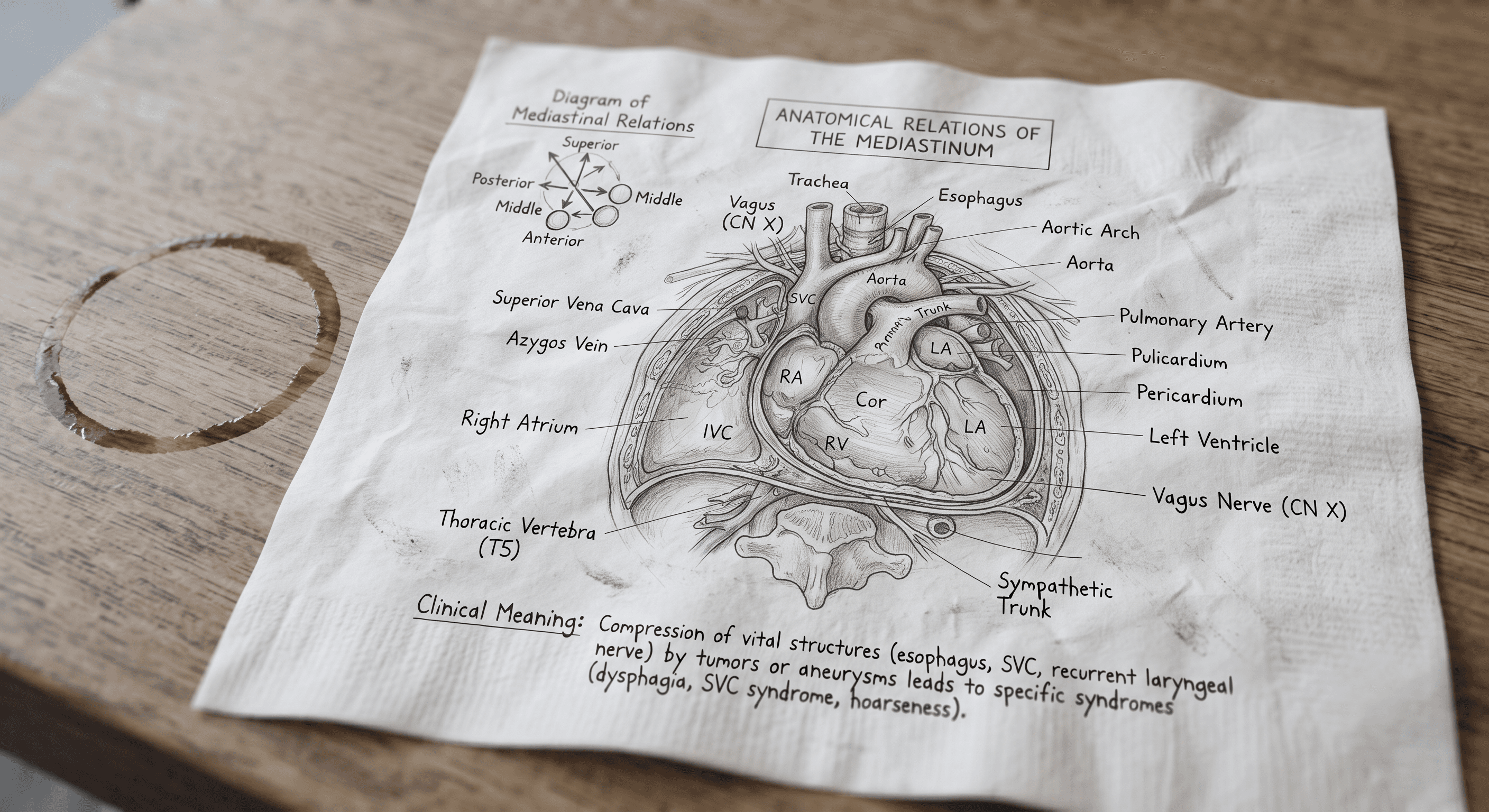
Knowing a topic and explaining it clearly on paper are different tasks. Anatomy practice offers a chance to work on both. Begin with the question and your department’s guidance, then choose the headings and diagrams that help you answer it.
- 1Match headings to the question you were asked.
- 2Check diagrams against approved resources.
- 3Use feedback to identify one specific improvement.
Let the question choose the structure
Read the prompt before writing a familiar template. A question about relations needs a different emphasis from one about development or applied anatomy. Use the allotted marks and available faculty guidance to judge the expected depth.
Outline only the headings that help answer this particular question. An outline is a planning aid, not a universal formula that guarantees marks.
- Choose a topic from your current course.
- Set a clear purpose for the attempt.
- Follow the guidance in approved resources.
Use diagrams to explain
A diagram should clarify a relationship that matters to the answer. Practise a simple, labelled version from memory, then compare it with an approved atlas or teaching resource.
Check orientation, labels, and the relationship between the diagram and your text. Keep your drawing legible and follow the conventions your course expects. Accuracy matters more than decoration.
- Make your own attempt first.
- Compare it with a reliable reference.
- Record omissions and uncertainties.
Review one weakness at a time
After an attempt, separate missing knowledge from unclear presentation. Did you omit a relevant relation, confuse a label, or leave an explanation unfinished?
Choose one correction and rewrite that part before attempting a related question. Take unresolved subject questions to faculty rather than assuming that a polished model answer is necessarily correct.
- Focus on one weakness at a time.
- Ask faculty about unresolved questions.
- Set a specific task for the next session.
A clearer answer grows through practice and review. Aim to explain what you understand, make uncertainty visible, and improve the next attempt.
Continue reading

A calmer way to read years of university questions without turning frequency into false certainty.
- ›Use previous papers alongside the current syllabus.
- ›Attempt questions before comparing answers.

A simple revision routine that turns familiar pages into decisions, retrieval, and feedback.
- ›Choose a manageable priority from your course and your gaps.
- ›Make an attempt before looking at an explanation.