
Practise clinical reasoning before the ward
Use short cases to make basic science knowledge more usable without pretending to replace clinical teaching.

Before a teaching session, it can help to practise organizing your thoughts around a course case. The purpose is to identify what you understand and what you need to ask—not to substitute independent study for supervised clinical learning.
- 1Use approved course cases and learning objectives.
- 2Distinguish observations from assumptions.
- 3Resolve uncertainty through supervised teaching.
Start with the learning objective
Choose a case from an approved teaching resource and identify the objective attached to it. Read what is given before reaching for an answer.
Summarize the relevant information in your own words. Keep observations separate from assumptions, and make a note of missing information rather than inventing it.
- Choose a topic from your current course.
- Set a clear purpose for the attempt.
- Follow the guidance in approved resources.
Explain the reasoning, including uncertainty
Write down why you think a detail matters and what further information you would want to discuss. Check your explanation against the course material.
If you use an AI tool to rehearse, verify its explanations and keep real patient information out of the exercise. A confident response from a tool is not evidence that the reasoning is sound.
- Make your own attempt first.
- Compare it with a reliable reference.
- Record omissions and uncertainties.
Bring better questions to teaching
Take one or two specific uncertainties to your supervisor or faculty session. Ask about the step in the reasoning that you could not explain.
After teaching, revise your notes to reflect what you learned. Independent preparation should help you participate in supervised learning; readiness for clinical practice is assessed through your formal training.
- Focus on one weakness at a time.
- Ask faculty about unresolved questions.
- Set a specific task for the next session.
The most useful preparation makes your questions more precise. Keep learning connected to faculty guidance and the expectations of your course.
Continue reading

A calmer way to read years of university questions without turning frequency into false certainty.
- ›Use previous papers alongside the current syllabus.
- ›Attempt questions before comparing answers.
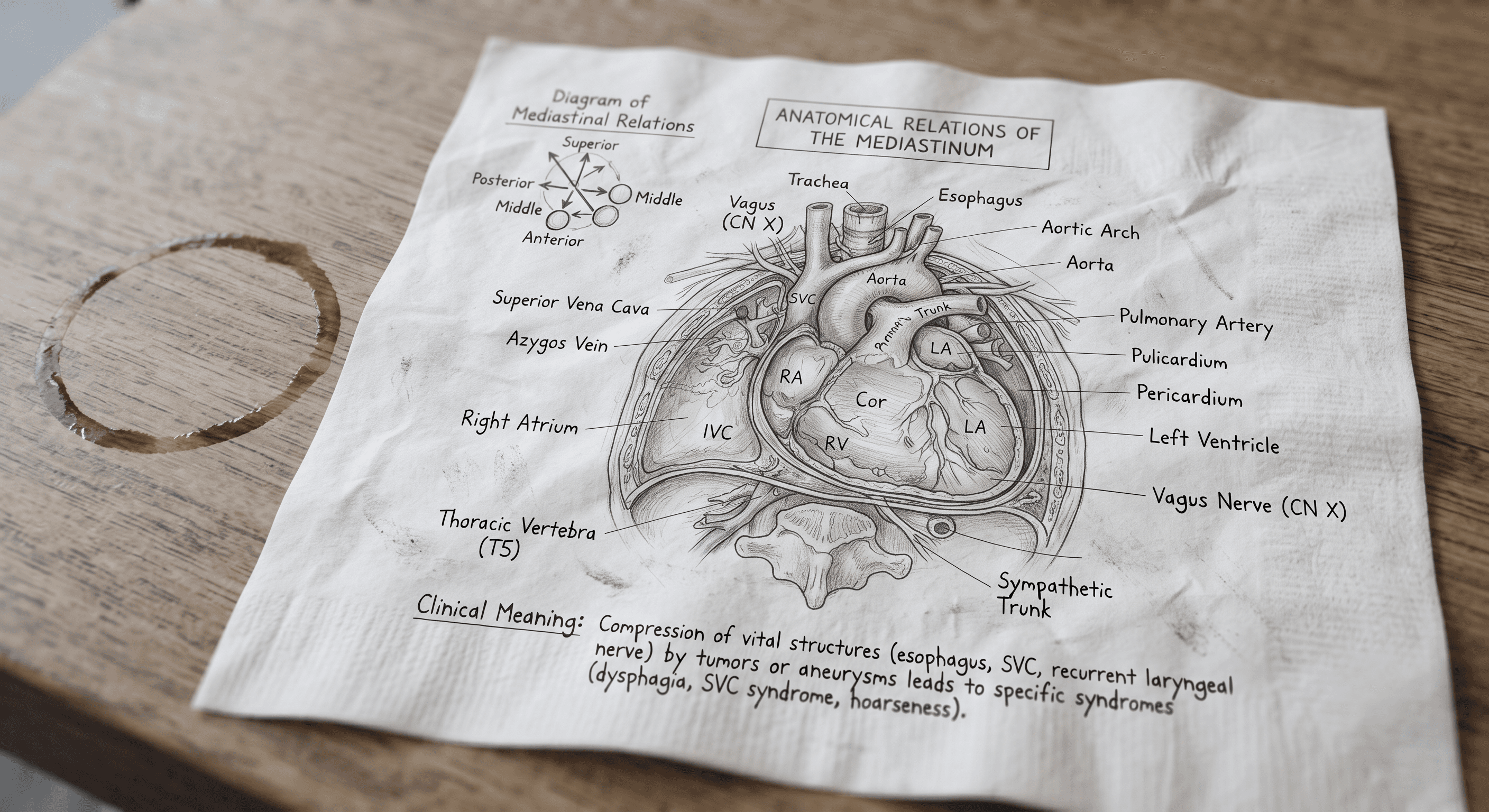
Relations, diagrams, and clinical meaning can turn a list of facts into a readable answer.
- ›Match headings to the question you were asked.
- ›Check diagrams against approved resources.